“`html
Engaging Younger Audiences: The Magic Behind Fascination
Magic has long been a source of wonder, captivating audiences across generations. But how do magicians succeed in engaging younger audiences in a time when attention spans are dominated by digital entertainment? This blog post explores the strategies magicians employ to entrance not just children, but audiences of all ages, whether during a live performance or a virtual show. From selecting tricks that appeal to various age groups, designing tailored performances, handling varied reactions, to innovative methods like virtual shows, we explore the enchanting world of magic. Here, we delve into how magicians masterfully entertain, adapting to the differing dynamics at parties or events, and ensure an inclusive, awe-inspiring experience for everyone present.
What Types of Magic Tricks Appeal to Both Kids and Adults?
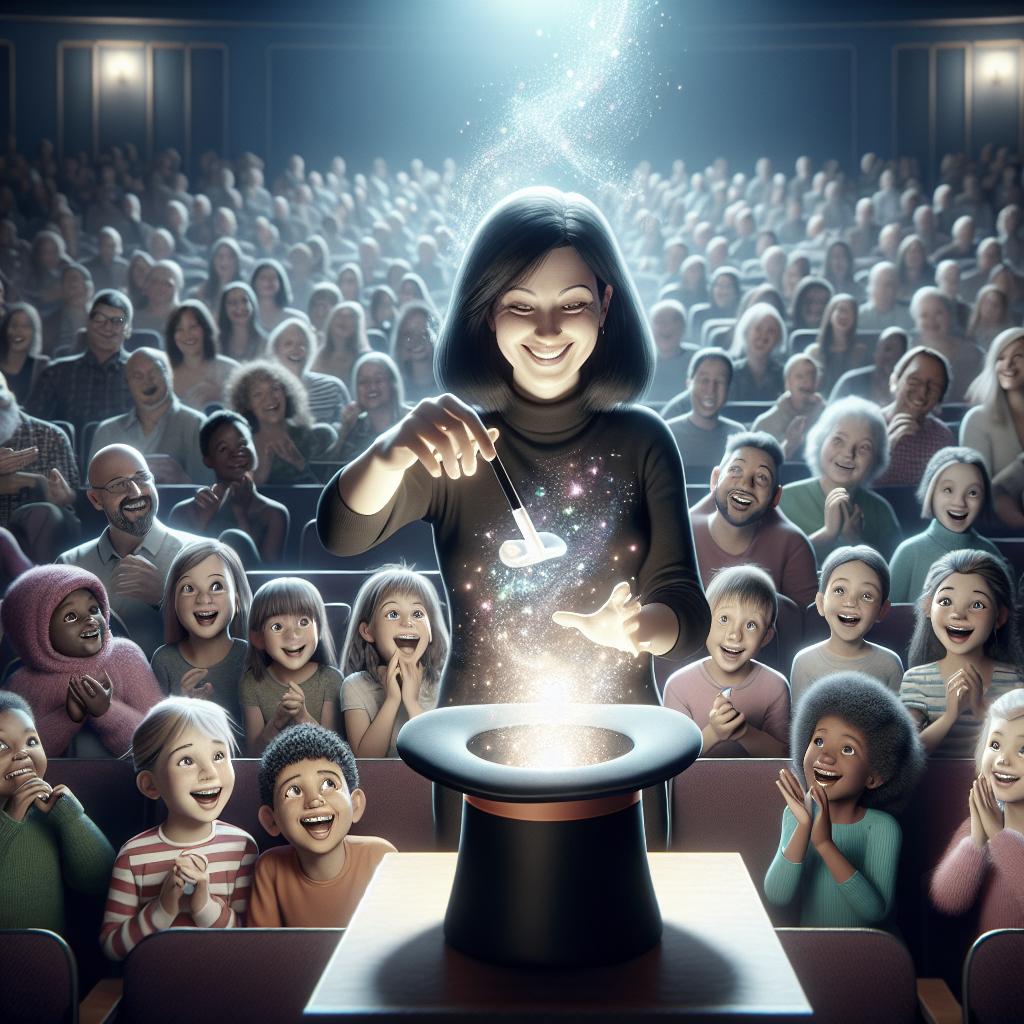
Magicians often incorporate a blend of visual and mental tricks to appeal to both kids and adults. For younger audiences, colorful and interactive tricks such as the classic “pulling a rabbit out of a hat” or balloon magic can capture their attention with ease due to their charming simplicity and surprise elements. For adults, mentalism or sleight of hand tricks provide a more sophisticated challenge, often leaving them pondering the magician’s skills and techniques.
Performers also harness universal themes of wonder and curiosity to bridge the gap between age groups. Illusions that unfold stories or mysteries can engage children on a visual level while simultaneously captivating the imaginations of older attendees, creating a shared experience. This dual approach ensures that the act remains inclusive, sustaining interest across all age spectra.
Additionally, magicians may leverage humor as a universal connector. Comedy magic, which incorporates jokes or funny failures into the routine, can entertain children with its simplicity and make adults chuckle at the cleverness of the delivery. This tactic ensures that the entire audience is engaged and entertained throughout the show.
How Do Magicians Tailor Their Performances for Different Age Groups at the Same Party?
Tailoring performances for diverse age groups requires a magician to be versatile and perceptive. At parties with mixed-age audiences, magicians often start with broadly appealing tricks that can serve as a warm-up, setting the stage for more complex or nuanced acts. This approach allows them to gauge audience reactions and adjust their performance in real-time.
For younger viewers at these events, shorter tricks that involve direct participation can hold their attention, as children are more likely to engage with acts they can interact with, such as counting cards or choosing objects. Simultaneously, magicians might insert more layered illusions or mentalism into the show for adult audiences who enjoy intellectual stimulation or the art of deduction.
A magician’s ability to navigate multiple layers of complexity in their routine is key to captivating a mixed-age crowd. By switching between various styles of magic and fostering an inclusive atmosphere, they can effectively hold the interest of everyone, ensuring that each age group leaves the event feeling enchanted and entertained.
How Do Magicians Handle Mixed Reactions from Kids and Adults During a Show?
Mixed reactions are a natural part of performing for diverse audiences, and experienced magicians are adept at handling them with poise and adaptability. When faced with varied responses, magicians often employ the technique of audience participation to reignite interest. This direct involvement can shift the audience’s focus back to the show and provide a fresh perspective on the ongoing performance.
Engaging storylines woven into their presentations are another method magicians use to address mixed reactions. By narrating a tale that progresses with each trick, they maintain coherence and curiosity, bridging the gap between different audience interpretations and expectations. The story provides context, allowing spectators to find personal connections and more profound enjoyment in the act.
The flexibility to read the room and adapt the performance accordingly is vital. Magicians keenly observe audience cues, like laughter, applause, or even silence, and seamlessly adjust their routines. This nimbleness ensures that the energy remains positive and dynamic, encouraging both kids and adults to engage more fully with the magical experience.
Frequently Asked Questions
Q1. What are some fun tricks a birthday party magician can perform?
Some engaging tricks for birthday parties include the classic “disappearing act” where objects disappear and reappear in unexpected places, making children light up with wonder. “Coin magic” where coins vanish and multiply is another favorite, as it combines visual surprise with storytelling. For older children and mixed audiences, magicians might use “levitation illusions,” invoking science-fiction-like reactions that leave spectators of all ages astounded.
Q2. What makes virtual magic shows an innovative way to engage audiences?
Virtual magic shows capitalize on the digital medium to bring a unique twist to traditional magic. By leveraging camera tricks and digital effects, magicians create visuals that are near impossible to replicate live. These shows offer the convenience of enjoying a magical experience from home, appealing especially to younger, tech-savvy audiences used to digital entertainment. Interactivity through live comments and reactions further enhances the engagement, making each virtual show an interactive spectacle.
Q3. What makes strolling magicians particularly engaging for guests of all ages?
Strolling magicians, who perform close-up magic within small groups, bring an intimate and personal touch to events. They seamlessly mingle with guests, performing tricks that are up-close and personal—turning ordinary events into unforgettable experiences. This format allows magicians to gauge real-time reactions and adjust their act to suit the audience’s preferences, creating spontaneous and personalized shows that resonate across age groups.
Future Prospects
| Aspect | Details |
|---|---|
| Appealing Tricks | Mix of visual and mental tricks; use of humor. |
| Tailored Performances | Versatility and adaptation to real-time audience responses. |
| Handling Mixed Reactions | Use of audience participation and storytelling. |
| Innovative Methods | Virtual shows leveraging digital effects and interactivity. |
“`